-
Home page

-
Educational projects
- Theoretical and practical seminar for psychologists and psychotherapists on mastering the European diagnostic tool OPD2

Theoretical and practical seminar for psychologists and psychotherapists on mastering the European diagnostic tool OPD2

Alter Ego Psychotherapy Center invites you to join a project to study the technology of applying Operationalized Psychodynamic Diagnostics (OPD2) - a diagnostic tool used in European countries by insurance medicine.
OPD2 practicum will increase your value as a specialist by 2 or 3 times
- Exclusive practical skills in using the OPD2 diagnostic and therapy planning tool
- Certificate in electronic form, upon completion of the seminar, accredited by the NPA, https://npa-ua.org
- The ability to maintain an electronic client database in a format recognized by European insurance companies. Which may become a necessity within the framework of the adoption of the law on psychotherapy.
While studying OPD2, you can not only familiarize yourself with the content of the methodology, but also gain practical skills in its application.

Oleksandra Biliavska
Founder of the Alter Ego Psychotherapy Center. Candidate of Psychological Sciences. Psychologist-consultant in the field of psychoanalysis, accredited EuroPsy psychologist. Certified in the use of OPD-2.
Structure
- Access to the platform (6 recorded video lectures)
- Access to the platform
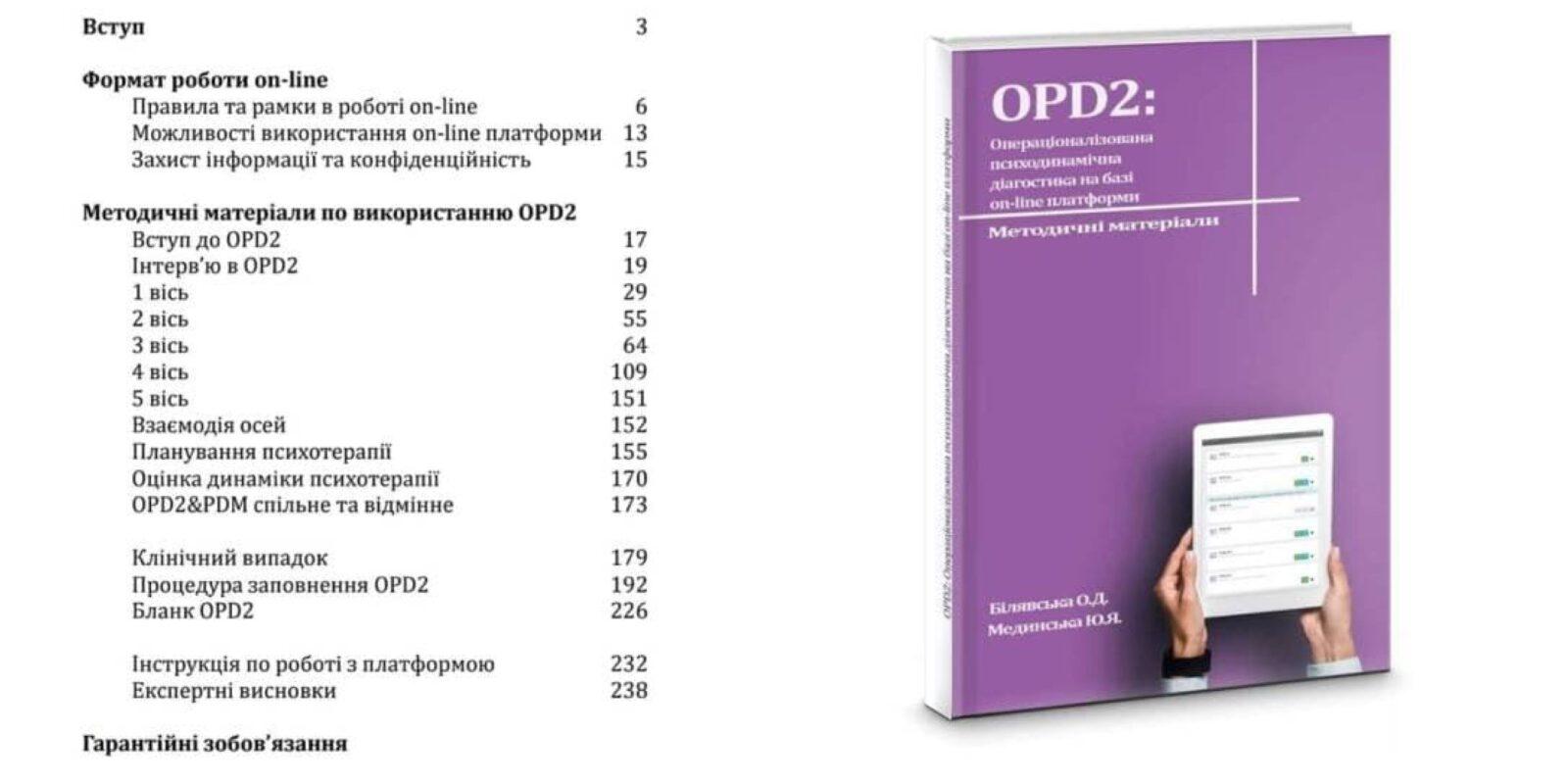
- Methodological materials on the use of OPD2 (book)
The certificate will be issued by the ALTER EGO Psychotherapy Center.
A textbook with methodology and clinical analyses can be purchased at the Alter Ego center or by phone:
+38 (067) 395 61 61
Answers to frequently asked questions

Psychotherapeutic work begins with diagnostics, the purpose of which is to identify the patient's characteristics that are fundamentally important for choosing a focus and planning therapy. Textbooks on psychotherapy necessarily include a chapter on how to conduct an initial diagnostic interview, how to collect anamnesis, etc. But few provide a clear, structured description of the algorithm for making a psychotherapeutic diagnosis and further planning of psychotherapy.
OPD (operationalized psychodynamic diagnostics) is a modern diagnostic tool that allows you to structure the information obtained during the diagnosis and, having highlighted the most important, make a diagnosis and competently plan treatment. To this end, the OPD working group (about 50 leading German psychotherapists) began developing clinical and empirical manuals in September 1992. Having analyzed modern psychodynamic research, the working group identified 5 axes, 4 of which are psychodynamic, based on a psychoanalytic approach (personality structure, intrapsychic conflict, transference and countertransference) and one descriptive axis. In Germany, insurance funds take over the payment for psychotherapy. In this regard, German psychotherapists needed a universal diagnostic tool, independent of the theoretical school, which therapists of all directions could use in their scientific and practical activities. Over the years of application, a large amount of empirical material has been collected. This practical experience and numerous studies have given rise to a review of some provisions of OPD-1, and to the creation of a new version of OPD-2 (amended and supplemented).
The type of illness experience and the specifics of its possible treatment are important for establishing indications for therapy. Based on the diagnostic interview, the following variables are assessed: the degree of complexity of somatic or mental data, the degree of suffering, the harm caused by the experience of loneliness, the degree of physical limitations, secondary benefits, the ability to understand psychodynamic and somatic relationships, the assessment of appropriate forms of treatment, motivation, as well as personal resources, etc.
It turns out that the patient's habitual behavior in relationships, that is, interpersonal attitudes and patterns, which manifest themselves as dominant and to a greater or lesser extent effective (they can be identified by observing the demonstrated behavior and analyzing the episodes told by the patient), as well as by the diagnostician's reactions (countertransference). It is important that the tool allows you to highlight interpersonal positions ("The patient repeatedly experiences himself in relationships with others ...", "The patient repeatedly experiences others as ...", "Others (including the interviewer) repeatedly experience the patient as ...", "Others repeatedly experience themselves in relationships with the patient as ..."), and then which elements of interpersonal relationships are most pronounced (This information is based on the circumplex model of interpersonal behavior), and to formulate the dynamics of relationships inherent in the patient.
Conflicts manifest themselves both at the subject and object levels. At each level, a passive and active (counterphobic) mode is revealed as an expression of conflict processing. The diagnostician's task is to assess the conflict (whether it can be assessed at all, how clearly the conflict is highlighted, how much the patient's defenses allow him to perceive his own conflicts, the presence of stress that affects the conflict). As well as its type and severity in different areas of life (parental family, partnership / family, work / professional life, social sphere, property and money, attitude to one's own body / sexuality, disease).
The authors offer the following list of conflicts:
- individuation – dependence;
- subordination – control;
- need for care – self-sufficiency;
- conflicts of self-worth;
- guilt conflicts (Superego);
- oedipal and sexual conflicts;
- identity conflicts.
Assessment of the structure, along with understanding the intrapsychic conflict and the central theme of the patient's relationship, is the most important task of psychodynamic diagnostics. In the existing manual, the structure is called "Structure of the Self in Relation to Others" (Rudolf, 1993), which is described using 8 structural categories: Self-perception and object perception: the ability to reflect on oneself, which involves an image of one's own self and a sense of identity, as well as the determination of one's own affects; the ability to perceive a realistic picture of the other in relationships, differentiation of the Self and the non-Self, perception of the integrity of the object, realism of perception. Self-regulation and regulation of relationships with others: the ability to integrate and regulate one's own needs, affects and feelings of self-worth, and on this basis to develop the ability to manage oneself, self-confidence and a sense of self-esteem; the ability to protect relationships from one's own impulses, balancing interests and expectations. Internal and external communication: the ability to conduct internal dialogues, understand oneself; the ability to participate in emotional exchange with another person, empathy. The ability to attach to internal and external objects: the ability to internalize, use introjects, a variety of preferences; the ability to emotionally attach to other people, accept help, separate. Qualitative characteristics and the effectiveness of defenses are assessed separately. From individual judgments, the researcher builds a structured profile and determines the level of personality structure. In order to distinguish the degree and quality of structural disorders, four levels of structural integration (high, moderate, low, disintegrated) were identified and described using reference examples.
As a result of filling out the OPD-2 data assessment forms, the psychotherapist receives a holistic personality profile, which allows for the identification of 5 therapy focuses (1 – a pattern of dysfunctional relationships, and 4 – from the axes “conflicts” and “structure”). Detailed diagnostics of conflict and structure allows for the assessment of the contribution of each aspect to the existing disorder and, accordingly, to make a strategic decision regarding therapy planning (including the features of the setting, therapeutic attitude, hierarchy of focuses, actions regarding dysfunctional relationship patterns and therapeutic techniques). In addition, the OPD-2 structure also includes tools that allow for the assessment of changes during therapy.
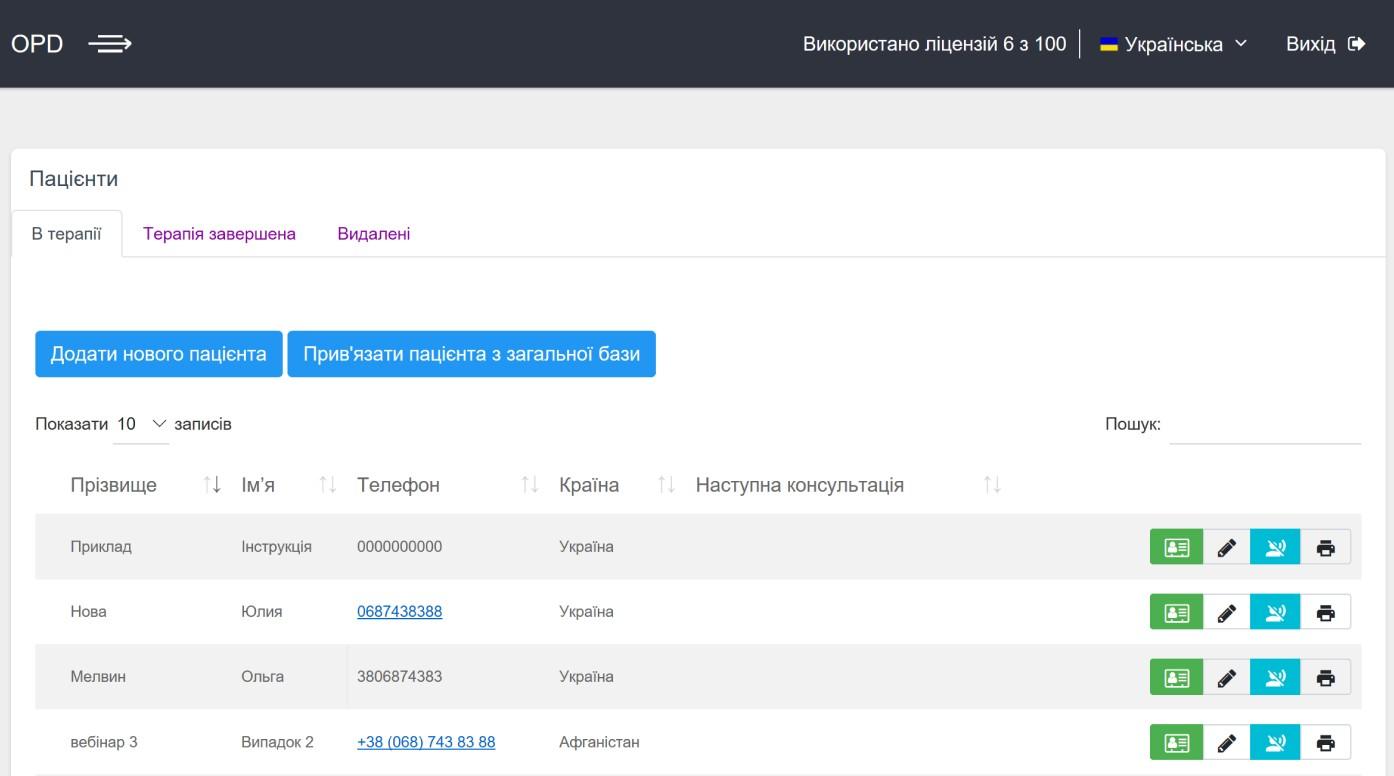
Examples of OPD office

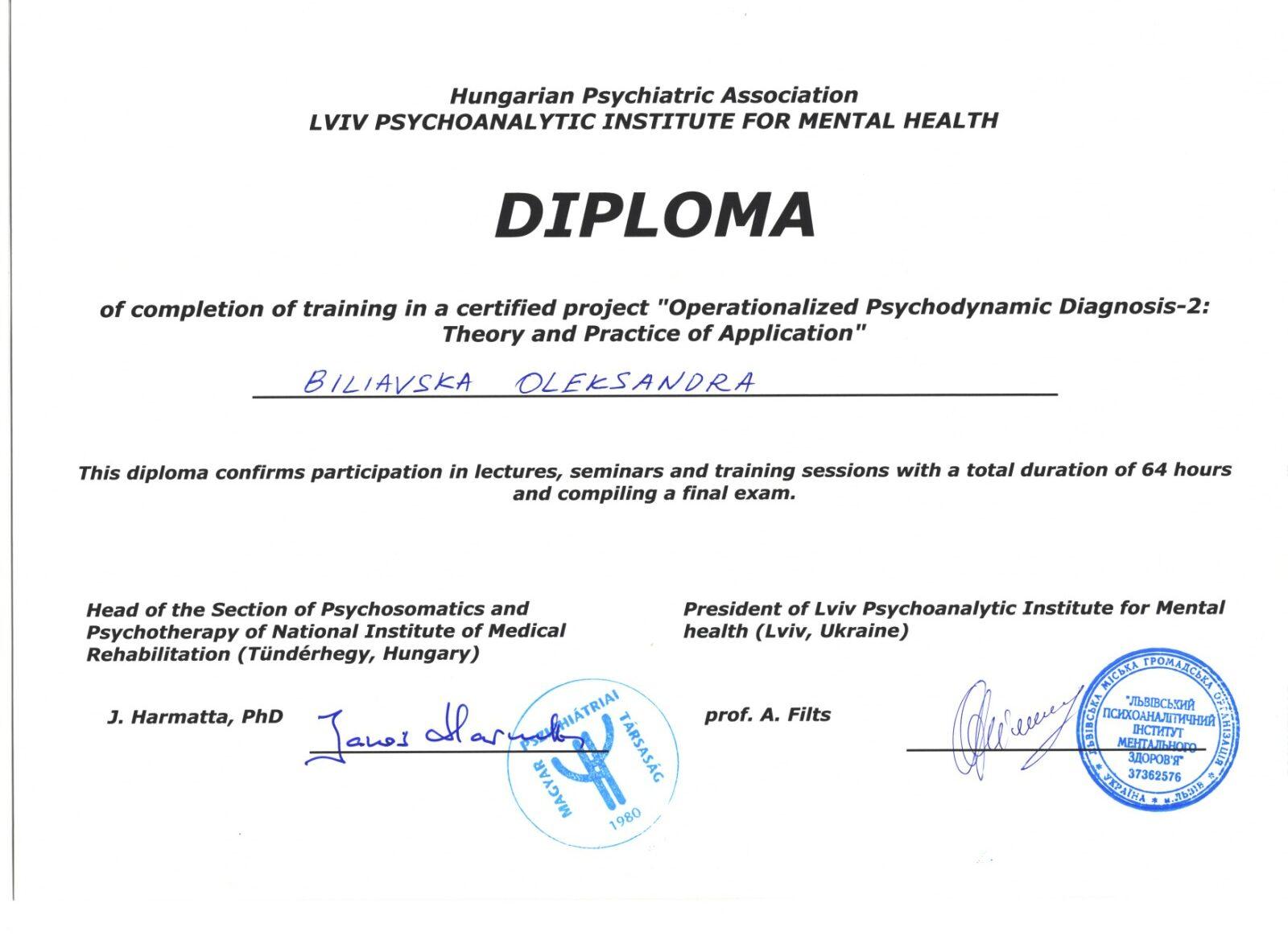
Diplomas