
-
Home page

-
Alter Ego Services
- Experiencing dramatic changes: moving or losing a job
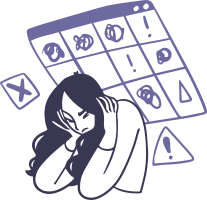
Experiencing dramatic changes: moving or losing a job

Formats of holding: Online or In Person


Why do people have a hard time enduring radical changes in their lives?
- Resistance to change: Some people tend to be resistant to change and experience stress or anxiety when faced with changes in habits, routines, or environments.
- Insecurity: People who feel insecure about their own abilities or capabilities may react anxiously to new situations because they do not know how they will be able to cope with new challenges.
- Control: Some people have a need for control over their lives and the circumstances around them. When change occurs, they may feel a loss of control, which leads to stress and anxiety.
- Comfort zone: Many people feel comfortable within their comfort zone and are reluctant to step outside of it. Changes can push them outside of this zone, leading to feelings of discomfort and stress.
- History of experiences: People who have had negative experiences with change in the past, such as losing a job or breaking up a relationship, may be more cautious and have difficulty coping with new changes.
How can radical changes in life affect people? - Emotional stress: Change can cause stress and anxiety due to the loss of the familiar and the need to adapt to new circumstances.
- Physical well-being: Stress due to change can affect physical health,
leading to increased stress levels, insomnia, decreased immunity, and other problems. - Collaboration: Change may require collaboration and communication with others, which
may be difficult for some people. - Self-examination: Change can force people to reconsider their goals, values, and plans.
for the future, which can be a challenge for their self-identification and self-knowledge. - Career Path: Changes in work or career field may necessitate
retraining, finding a new job or adapting to new requirements and responsibilities. - Interpersonal relationships: Changes can affect relationships with family, friends, colleagues, and partners, which may require new communication strategies and
mutual understanding.
How to understand if you are afraid of cardinal changes in life?
- Physical symptoms of stress: Do you experience physical symptoms of stress, such as increased heart rate, anxiety, sleep disturbance, or changes in appetite?
- Emotional reactions: What emotions do thoughts of radical change evoke in you? Do you feel anxious, afraid, sad, worried, or excited?
- Thoughts and beliefs: What thoughts and beliefs come to mind when you think about possible radical changes? Do you consider them possible, or do you feel powerless in the face of them?
- Behavior: How do you react to possible radical changes? Do you try to avoid them, seeking stability, or, on the contrary, do you feel a desire to explore new possibilities?
- Inner feelings: What feelings arise in you when you imagine your future with radical changes? Do you feel excited, discouraged, confused, or, on the contrary, do you feel confident and positive?
Specialists who will help you


Adult
Individual
Group consultation
Teenage
Family consultation
Couples consultation
Online
2 580 session

Children's
Teenage
Adult
Individual
Couples consultation
Family consultation
Group consultation
Online
1 300 session





Make a gift for yourself or your loved ones
-
 Choose the format and location
-
Specialist experience
-
And the desired amount
How does the first consultation
take place?
01
Introduction and discussion of the problem
The work begins with an initial interview, where the main tasks are defined and all framework conditions are agreed upon. For the initial interview, 1 to 4 meetings are required.
02
We outline a plan for further actions
We clarify our expectations from the consultations, the goals that can be achieved during the work. We will discuss the duration of the analysis and the frequency of meetings.
03
Understanding the scope of work and solution methods
Sometimes there is a need to solve one specific problem, but there is no need for a deep analysis. It may be the other way around. We will discuss this and come to a joint solution.


Work is done individually.

The session lasts about 50 minutes.

Payment in a convenient format: cash or online

Ability to work via Google Meet or Zoom

Working languages: Ukrainian, Russian and English by agreement

Postponement of consultation by 24 hours